
Littleton’s Cultural Evolution: A Community Built Through the Arts
Arts and culture have long played a defining role in Littleton’s identity. From early civic investments and volunteer-led traditions to nationally recognized institutions and public policy, creativity has been woven into the life of the community for more than a century. This document tells that story—not as a single moment or achievement, but as an evolving narrative shaped by people, places, and shared values.
At its core, this is a record of how Littleton’s arts and culture community has grown: through individual stewardship, institutional leadership, community participation, and increasingly intentional civic action. It traces key milestones and founding moments, recognizes those who helped move the arts forward, and reflects on a pivotal recent period that reshaped how culture is supported and coordinated across the city.
This document is also forward-looking. It outlines the conditions now in place, the priorities that will guide continued growth, and the shared responsibility required to sustain a vibrant cultural ecosystem. It is not a prescriptive plan, but a framework—one that invites collaboration, alignment, and ongoing stewardship from residents, artists, organizations, businesses, and civic leaders alike.
Together, the history, timeline, and vision that follow offer a common reference point: a way to understand where Littleton’s arts community has been, where it stands today, and how the future can be built—intentionally and together.
Timeline of Arts & Culture in Littleton
The history of arts and culture in Littleton is a story of steady, intentional growth. Over more than a century, institutions were founded, traditions took hold, and policies evolved—guided by individuals and organizations committed to weaving creativity into civic life. Their combined efforts created the foundation for today’s arts ecosystem, one that is increasingly connected, resilient, and positioned for the future. The following timeline highlights key milestones, people, and decisions that shaped this trajectory.

Foundations & Early Cultural Life (Pre- 1900s)
-
early community life includes music, storytelling, and informal gatherings
-
later becoming a key platform for documenting and promoting civic and cultural life
-
Professor Arthur C. Marriott teaches piano, violin, and voice; establishes one of Littleton’s first orchestras
-
This laid the foundation for what would become Bemis Public Library, Littleton’s first major cultural anchor
-
Where it stands today on Main Street
-
He helped establish the library as a lasting center for learning, culture, and community life
-
founded by Houston Waring, editor of the Littleton Independent, embedding arts, history, and celebration into Littleton’s civic identity
Early 20th Century: Civic Institutions Take Shape (1900–1939)

-
beginning decades of stewardship that blend hospitality, horticulture, and community welcome.
-
Rapid population growth increases demand for civic and cultural amenities
-
The Friends of the Library expand programming, exhibitions, and public engagement
-
first faculty hire is art professor Herman Jantzen, signaling the central role of the arts in the college’s mission
-
contributing to the growth of music instruction and artistic excellence in the region
Mid-Century Growth & Cultural Expansion (1940–1969)

-
blending preservation with public education
-
driven by artists, volunteers, and civic advocates.
-
helping elevate expectations for live performance.
-
expanding high-quality choral music in the community
Preservation, Volunteerism & Performing Arts (1970–1979)

A Defining Cultural Era (1980–1989)

-
champions historic preservation, public art, and civic beautification
-
transforming a civic building into a permanent performing arts venue
-
-
reinforcing arts as part of shared civic tradition
-
Her decades of stewardship culminate in the preservation of the property that becomes Hudson Gardens

Education, Access & New Cultural Anchors (1990–2009)
-
becoming a major hub for creative education and community engagement
-
fulfilling the Hudsons’ vision of shared beauty and welcome
-
expanding regional access to cultural venues
-
-
extending literary arts into the community
-
reflecting a growing commitment to public art
Maturation & Planning (2010–2019)

-
reflecting long-standing beautification efforts championed by Vaughn Gardinier
-
expanding access to visual arts and artists
-
-
creating a formal civic home for arts and culture policy
Disruption & Transformation (2020–2022)

-
arts organizations pivot to virtual and outdoor programming, highlighting the essential role of culture in community resilience
-
(ACB).
-
dedicated to arts, culture, and tourism
-
securing its long-term future
Building a Connected Arts Ecosystem (2023–Present)

-
normalizing collaboration across organizations
-
Tier One and Small Grants programs
-
-
providing both celebration and cumulative community data
-
-
-
-
-
Town Hall Arts Center advances $8+ million capital campaign
Littleton Museum updates permanent exhibits
Hudson Gardens implements new vision plan
-
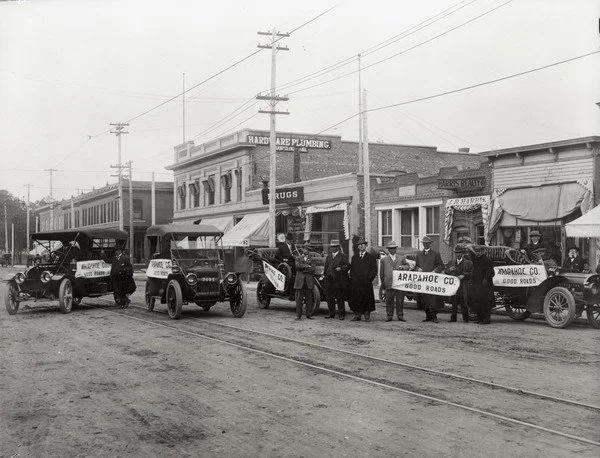
From its earliest days, Littleton was shaped not only by industry, infrastructure, and geography, but by the human impulse to gather, celebrate, and create. Long before formal arts organizations existed, culture took root through shared experiences — music played in public spaces, stories passed between neighbors, and civic traditions that helped turn a settlement into a community.
-
As Littleton emerged in the late nineteenth and early twentieth centuries as a farming, railroad, and civic center, cultural life developed organically alongside daily life. Music was a constant presence. Community bands performed for holidays and public events, filling streets and parks with sound and reinforcing a shared civic rhythm. These early performances weren’t framed as “the arts” in a formal sense — they were simply part of what it meant to live together in a growing town.
Public gathering places played an equally important role. Schools, churches, and civic halls doubled as spaces for performances, lectures, and social events. The opening of the Carnegie Library in 1917 marked one of the city’s earliest commitments to culture as a public good. More than a repository for books, the library became a place for learning, discussion, and shared intellectual life, signaling that creativity and education belonged at the heart of the community.
This early period established an important pattern: culture in Littleton was not something imported or imposed — it grew from participation, volunteerism, and civic pride.
-
As Littleton matured through the 1920s and mid-century, that informal cultural life began to take on more recognizable structure. In 1929, the community launched what would become one of its most enduring traditions: Western Welcome Week. What began as a civic celebration evolved into a cornerstone cultural event, weaving together parades, music, performance, and visual art. Over time, Western Welcome Week became a shared expression of identity — a moment each year when culture moved into the streets and belonged to everyone.
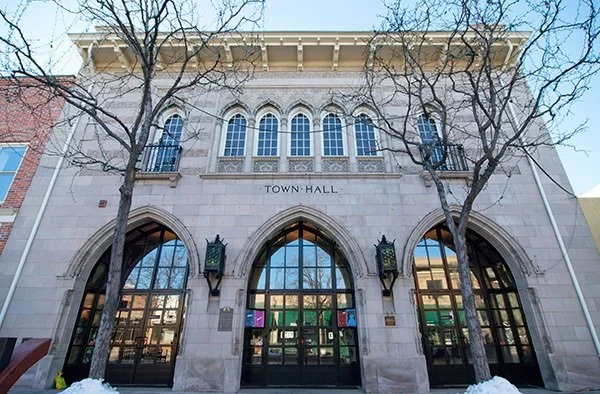
Civic buildings reinforced this sense of shared space. The construction of Town Hall in 1920 provided not only a seat of government, but a gathering place for public life — a role that would prove critical decades later. Libraries continued to expand their cultural role, hosting exhibits, lectures, and programs that broadened access to ideas and creativity.
Littleton also began looking outward. In the early 1960s, the city established a sister-city relationship with Bega, Australia — one of the earliest such partnerships between communities in the United States and Australia. Rooted in cultural curiosity and civic diplomacy, the relationship reflected a belief that local identity is strengthened, not diminished, by global connection. Cultural exchange, friendship, and mutual learning became part of Littleton’s broader story.
Education further solidified the city’s cultural infrastructure. The founding of Arapahoe Community College in the 1960s — with arts embedded from the very beginning — reinforced the idea that creative expression, learning, and community life were deeply connected. Together, these efforts laid the groundwork for a more ambitious cultural future.
-
By the 1970s, Littleton was no longer simply growing — it was choosing to define itself through culture. This period marked a true cultural boom, driven by residents, volunteers, and artists who believed that creativity should be visible, valued, and central to civic life.
One of the clearest expressions of this momentum was the community’s determination to preserve and repurpose historic spaces for the arts. In 1976, rather than allowing the old railroad depot to disappear, local advocates transformed it into what is now the Depot Art Gallery. This act of preservation did more than save a building — it created a permanent home for visual art in downtown Littleton and signaled that history and creativity could coexist in meaningful ways.
This same period saw a growing recognition that culture was not only about performance and visual art, but about memory and place. In 1970, the Littleton Museum opened, giving the community a dedicated space to preserve, interpret, and share its history. More than a traditional museum, it was conceived as a living educational environment — one that connected past and present through exhibits, programs, and immersive experiences. Its opening signaled a broader cultural maturity, affirming that understanding where Littleton came from was essential to shaping where it was going.
At the same time, community theater was gaining energy and visibility. Productions like Fiasco became local touchstones — humorous, inventive performances that drew large audiences and demonstrated that Littleton residents didn’t just want to attend the arts, they wanted to make them. Groups such as the Columbine Players and, later, the Main Street Players built on this enthusiasm, offering opportunities for residents of all ages to participate in live theater. These grassroots efforts laid the groundwork for a more ambitious performing arts scene and helped normalize the idea that high-quality theater could thrive outside major metropolitan centers.
This growing appetite for performance found a permanent home in the early 1980s when Littleton’s historic Town Hall, originally built in 1920, was reborn as the Town Hall Arts Center. What had once been a seat of local government became a professional performing arts venue through the vision and commitment of civic leaders, donors, artists, and volunteers. From its opening, Town Hall Arts Center brought musicals, comedies, dramas, concerts, and youth programming to the heart of downtown, transforming Main Street into a cultural destination and anchoring the city’s performing arts identity.
Music was evolving alongside theater. The Littleton Symphony Orchestra grew from a modest string ensemble into a full community orchestra, creating opportunities for local musicians and giving audiences access to orchestral music close to home. Choral music also flourished as Voices West — originally founded as the Littleton Choral Society — expanded its reach and reputation, performing ambitious works and engaging singers and audiences from across the region. Together, these ensembles reinforced the idea that excellence and accessibility could go hand in hand.
Throughout this period, longstanding traditions like Western Welcome Week continued to evolve, increasingly incorporating visual art, live music, and performance into their programming. What began decades earlier as a civic celebration became a true cultural showcase, reflecting how deeply the arts had become woven into Littleton’s shared identity.
By the end of the 1980s, the shift was unmistakable. The arts in Littleton were no longer occasional or peripheral. They were sustained by institutions, energized by volunteers, supported by audiences, and embedded in the city’s public spaces and traditions. This era did not just produce new organizations or venues — it established a cultural confidence that would shape Littleton’s creative life for decades to come.
-
By the 1990s, the cultural energy sparked in earlier decades began to mature and spread more broadly across the city. The focus shifted from establishing institutions to integrating art into place — into landscapes, public spaces, education, and daily life.
As Littleton’s cultural life matured, the arts began to extend beyond stages and galleries into the built environment. Architecture, in particular, emerged as a powerful expression of Littleton’s cultural identity, reflecting shared values through form, scale, and design. While the city is home to notable historic structures — including the Old Mill, the Carnegie Library, and the building that would become the Town Hall Arts Center — perhaps the most distinctive architectural legacy of the late twentieth century is Littleton’s “Mid-Mod Mile.” Stretching approximately 1.3 miles along Littleton Boulevard, this corridor represents one of the most significant collections of mid-century modern architecture in the state.
Developed primarily between the 1950s and 1970s, the Mid-Mod Mile reflects a moment when Littleton embraced modern design as an expression of civic confidence, optimism, and forward thinking. Clean lines, functional forms, and an emphasis on openness and light mirrored broader cultural values of the era, when cities invested in public buildings, education, and community infrastructure as statements about the future. Today, this concentration of mid-century architecture stands not only as a design asset, but as a cultural one — a reminder that the arts in Littleton have long included how the city builds, plans, and presents itself. Preserving and reinterpreting this architectural legacy continues to shape conversations about identity, placemaking, and the role of design in civic life.
Another clear expression of the broader shift, toward arts and culture shaping entire environments rather than isolated venues, was the opening and growth of Hudson Gardens as a public cultural destination. Blending horticulture, environmental stewardship, and artistic programming, the gardens became a place where culture was experienced outdoors and informally — through concerts, seasonal events, and everyday visits. Hudson Gardens demonstrated that art and culture could shape not only buildings, but entire environments.
As Littleton’s cultural institutions matured in the 1990s, the Littleton Museum expanded as well, deepening its role as both an educational and cultural anchor. New facilities and exhibits allowed the museum to broaden its programming, serve more visitors, and engage families and students through hands-on learning and storytelling. This expansion reflected a wider shift happening across the city: arts and culture were no longer simply events to attend, but places to return to — spaces that invited curiosity, reflection, and ongoing community engagement.
Downtown Littleton experienced a similar evolution through the expansion of arts education and creative spaces. The opening of the ACC Art & Design Center in 1990 transformed a former retail site into a hub for artistic learning, innovation, and community engagement. Exhibitions, workshops, and hands-on experiences brought new audiences into downtown, reinforcing the connection between arts, education, and economic vitality.
This era also saw the growth of public art and civic programming. Murals, sculptures, and temporary installations began appearing in parks and public spaces, supported by both the city and regional partners. South Suburban Parks and Recreation expanded cultural programming within parks and community spaces, recognizing that recreation and art could coexist as tools for placemaking and connection.
Community events expanded as well. Concerts in parks, summer music series, and large-scale celebrations — including Fourth of July festivities — brought thousands together, activating public spaces and reinforcing Littleton’s role as a regional destination. The arrival of light rail further transformed access, making it easier for visitors from across the metro area to experience Littleton’s downtown, cultural venues, and events. As surrounding communities grew, particularly to the south, Littleton found itself welcoming new audiences — and with them, new expectations and opportunities.
These changes were not without growing pains. Increased visitation, rising costs, and evolving demographics challenged arts organizations to adapt. But the overall trajectory remained positive. The arts were no longer confined to specific venues or seasons — they were becoming embedded in how the city planned, gathered, and presented itself to the world.
-
In 2020, Littleton’s long arc of cultural growth was abruptly interrupted. The COVID-19 pandemic forced theaters to go dark, concerts to be canceled, galleries to close, and long-standing traditions to pause. For the first time in generations, shared artistic experiences—plays, concerts, festivals, classes—were no longer readily available.
The sudden absence was deeply felt. It revealed something that had long been understood intuitively but rarely articulated so clearly: the arts were not peripheral to community life, but central to how people connected, reflected, and found meaning together.
This moment marked a clear transition in Littleton’s cultural history. It closed a chapter defined largely by strong, independent institutions operating in parallel, and opened a new one—one that would ask how the arts might be more connected, more resilient, and more fully aligned with the city’s civic life. That question would shape the years that followed.
Historical Narrative
-
By the end of 2019, Littleton’s arts and culture community stood at a quiet but meaningful turning point. Decades of growth had produced strong institutions, committed artists, and an engaged public, yet much of that energy still lived in parallel lanes. Organizations thrived, but often independently. The arts were valued, but not yet fully aligned within the city’s civic framework. What followed over the next five years would fundamentally change that trajectory.
In late 2019, the City Council took a deliberate step by forming the Arts & Culture Commission. This move did not immediately result in new performances, exhibitions, or festivals. Instead, it created something more foundational: a place within city governance where arts and culture could be considered strategically and holistically, alongside other civic priorities. It marked an early acknowledgment that creativity, identity, and quality of life deserved focused attention at the policy level. Though still finding its footing, the commission signaled that the city was beginning to think differently about the role of the arts. Just months later, the pandemic arrived.
-
The COVID-19 pandemic disrupted nearly every aspect of daily life, and the arts were among the most visibly affected. Performances were canceled, galleries closed, festivals postponed, and familiar gathering places fell silent. Yet even as the arts paused, their absence made something unmistakably clear. Without shared cultural experiences — music, theater, public events, creative spaces — community life felt diminished. What had long been appreciated was suddenly revealed as essential.
At the same time, the pandemic exposed the limitations of working in isolation. Arts organizations faced similar challenges simultaneously, often without formal mechanisms for coordination or shared problem-solving. In this moment of disruption, the groundwork laid just months earlier took on new meaning. The Arts & Culture Commission, later evolving into the Arts & Culture Board (ACB), became a place where conversation could turn into coordination, and where the arts could be understood not just as programming, but as part of the city’s resilience and recovery. What began as a forward-thinking civic gesture quickly proved prescient. The pandemic did not create the need for change, but it accelerated it—revealing both the strength of Littleton’s cultural institutions and the limits of working in isolation.
-
As the city emerged from the most acute phase of the pandemic, a series of decisions followed that transformed intention into structure. The Arts & Culture Board clarified its role as an advisory and connective body — not a producer of art, but a steward of the conditions that allow art and culture to thrive. This distinction proved critical. Rather than competing with existing organizations, the Board focused on alignment, communication, and long-term strategy, helping move the arts from passion-driven activity toward a more coordinated ecosystem.
That shift became unmistakable with the passage of the city’s Lodgers Tax, known as Issue 3B. Coming on the heels of Issue 3A, which addressed core infrastructure needs, the Lodgers Tax represented a clear public statement: arts, culture, and tourism were not ancillary, but integral to Littleton’s economic vitality and community identity.
What made Issue 3B especially significant was how it passed. For the first time, Littleton’s arts and cultural organizations came together around a shared goal. Institutions that had long operated independently aligned their voices, coordinated outreach, and collectively made the case to voters for the value of arts and culture. That unified effort demonstrated a new level of trust and cooperation across the sector — and it worked. Voters enthusiastically endorsed a stable, dedicated funding source that provided predictability and credibility — not just for individual organizations, but for the cultural sector as a whole. The passage of 3B marked both a milestone in public investment and a turning point in collaboration.
-
With public commitment secured, attention turned to implementation. In the first three years alone, nearly one and a quarter million dollars in Lodgers Tax funding was awarded to Tier One cultural institutions, including the Littleton Museum, Bemis Public Library, Town Hall Arts Center, and Hudson Gardens. This funding provided stability rarely available in the arts — predictable, reliable support that allowed these institutions to plan ahead, retain or rehire staff, expand programming, and invest in long-term capacity rather than short-term survival. In the case of Hudson Gardens, Lodgers Tax funding supported the development of a comprehensive strategic master plan, ensuring that one of Littleton’s most treasured cultural and natural assets could grow sustainably and intentionally.
Equally important, the ACB recognized that a thriving arts community depends on more than its largest institutions. Through the Small Grants program, more than half a million dollars was distributed to nonprofit organizations serving Littleton across disciplines and neighborhoods. These grants supported theater groups, music ensembles, cultural festivals, heritage organizations, and arts education initiatives — many of them volunteer-led and deeply rooted in the community. For smaller organizations, this funding was often catalytic, enabling new programs, first-time collaborations, and expanded outreach.
Lodgers Tax funds were also invested beyond individual organizations, strengthening the infrastructure and visibility of arts and culture citywide. Funding supported the launch of VisitLittleton.org, creating a centralized platform to promote arts, culture, and tourism and helping residents and visitors alike discover what Littleton has to offer. Resources enabled the city to launch a formal Mural Program, placing art in everyday public spaces and reinforcing the idea that creativity belongs throughout the city, not just inside cultural venues.
Importantly, Lodgers Tax funding also made it possible to think strategically rather than reactively. Support for initiatives like the Community Arts & Culture Strategic Plan provided a shared roadmap for growth, aligning organizations, city leadership, and partners around common values and long-term goals. Taken together, these investments did more than fund programs — they built capacity, encouraged collaboration, and changed how the arts functioned within the civic ecosystem.
-
More recently, the City Council’s adoption of a Percent for Art funding policy added another brick to this growing foundation. Together with the Lodgers Tax, Littleton now has two distinct mechanisms for supporting arts and culture that are embedded in city policy rather than left to annual discretion. This structure brings a level of durability that is rare in the arts, particularly in suburban communities, ensuring that funding for creativity is not easily sidelined by shifting priorities or leadership changes. Beyond the dollars themselves, these two funding tools—the Lodgers Tax, which supports cultural operations and programming, and the Percent for Art program, affirming the importance of the importance of the built environment—communicate a clear value held by the City and City Council: that art is not an afterthought, but an essential part of residents’ way of life. Even as the city balances competing demands on its resources, this funding affirms that creativity and cultural expression will continue to receive reliable, intentional support.
-
With governance and funding in place, attention turned to how collaboration actually happens. One of the most consequential developments of this period was the creation of the Cultural & Arts Partners (CAP) Group, a program of the Arts & Culture Board. CAP was not designed as a grant program or a promotional vehicle. Instead, it created a consistent forum for arts organizations, institutions, and partners to build trust, share information, learn together, and identify opportunities for collaboration. In a community long characterized by strong but siloed organizations, CAP quietly changed behavior. It made alignment normal, conversation routine, and shared momentum possible.
The City’s new State of the Arts event and the Arts & Culture Award created shared moments of reflection and celebration, reinforcing a collective narrative about the role of culture in Littleton. They also provide an annual opportunity to share cumulative data on reach, participation, and economic contribution, grounding celebration in a clear understanding of how the arts serve the community. These efforts did not replace existing traditions; they added connective tissue — helping residents, artists, and leaders see the arts as a shared civic asset.
This period also saw renewed investment in leadership and capacity. Arapahoe Community College restarted the Littleton Leadership Academy, recognizing that moments of transformation require prepared and engaged leaders. Civic leadership, nonprofit stewardship, and cultural vitality are deeply interconnected, and the return of the Leadership Academy — alongside leadership training supported by the Arts & Culture Board — helped ensure that the human infrastructure needed to sustain progress would grow alongside policy and funding.
As momentum built, arts and culture became increasingly integrated into broader planning efforts. The Arts & Culture Community Strategic Plan provided a shared roadmap, articulating priorities and values that extended beyond any single organization. The creation of the Downtown Development Authority and the launch of Project Downtown aligned redevelopment with cultural vitality. South Suburban Parks and Recreation District assumed operations of Hudson Gardens, securing the future of one of Littleton’s most beloved cultural and natural assets. Across planning, parks, and redevelopment, culture was no longer an afterthought — it was part of the conversation from the outset.
-
Within this evolving ecosystem, a new organization emerged to fill a long-recognized gap. Littleton Arts was established as an independent nonprofit dedicated to building a community that loves the arts. Its creation was not a response to absence, but to opportunity. With governance, funding, and planning structures taking shape, there was a growing need for a central connector — an entity focused on awareness, participation, and collaboration at the individual and community level. Littleton Arts was designed to work alongside the Arts & Culture Board, the City, South Suburban, and the Downtown Development Authority, translating policy and planning into visible, community-facing engagement.
-
Taken together, these developments mark more than a period of recovery or incremental improvement. They represent a structural shift. In just five years, Littleton moved from valuing the arts to organizing around them; from supporting individual efforts to cultivating an ecosystem; from tradition to intention. Leadership, funding, policy, planning, and community connection are now moving in the same direction.
Littleton stands at a threshold. The groundwork has been laid, the systems are aligning, and the conditions for a new era of arts and culture are in place. What comes next is not about whether the arts belong at the center of civic life — that question has been answered. The next chapter is about how this momentum is carried forward, expanded, and sustained.
That is the story of the future — and IT BEGINS NOW!
-
Littleton’s arts and culture community has reached a moment of uncommon alignment. Strong institutions, engaged residents, thoughtful policy, and reliable funding are now moving in the same direction. This moment invites a shift—from building the foundation to shaping what comes next. The future of arts and culture in Littleton will not be defined by a single program or organization, but by shared priorities, intentional choices, and a collective commitment to stewardship. What follows is not a prediction, but a framework for how the city can continue to move forward—clarifying what matters most, how progress is sustained, and how everyone has a role in building a cultural life that reflects and serves the whole community.
Arts & Culture Champion Profiles
I think we should have an into sentence or two here
Edwin A. Bemis
Music, Memory, and the Foundations of Culture
Houstoun Waring
Storytelling, Celebration, and Cultural Connection
J.J. Benedict
Architecture as Civic Expression
Sonya Ellingboe
The Heartbeat of Littleton’s Arts Connection 265
King and Evelyn Hudson
Culture Rooted in Nature and Welcome
Vaughn Gardinier
Vision, Leadership, and Cultural Placemaking
